
Introduction
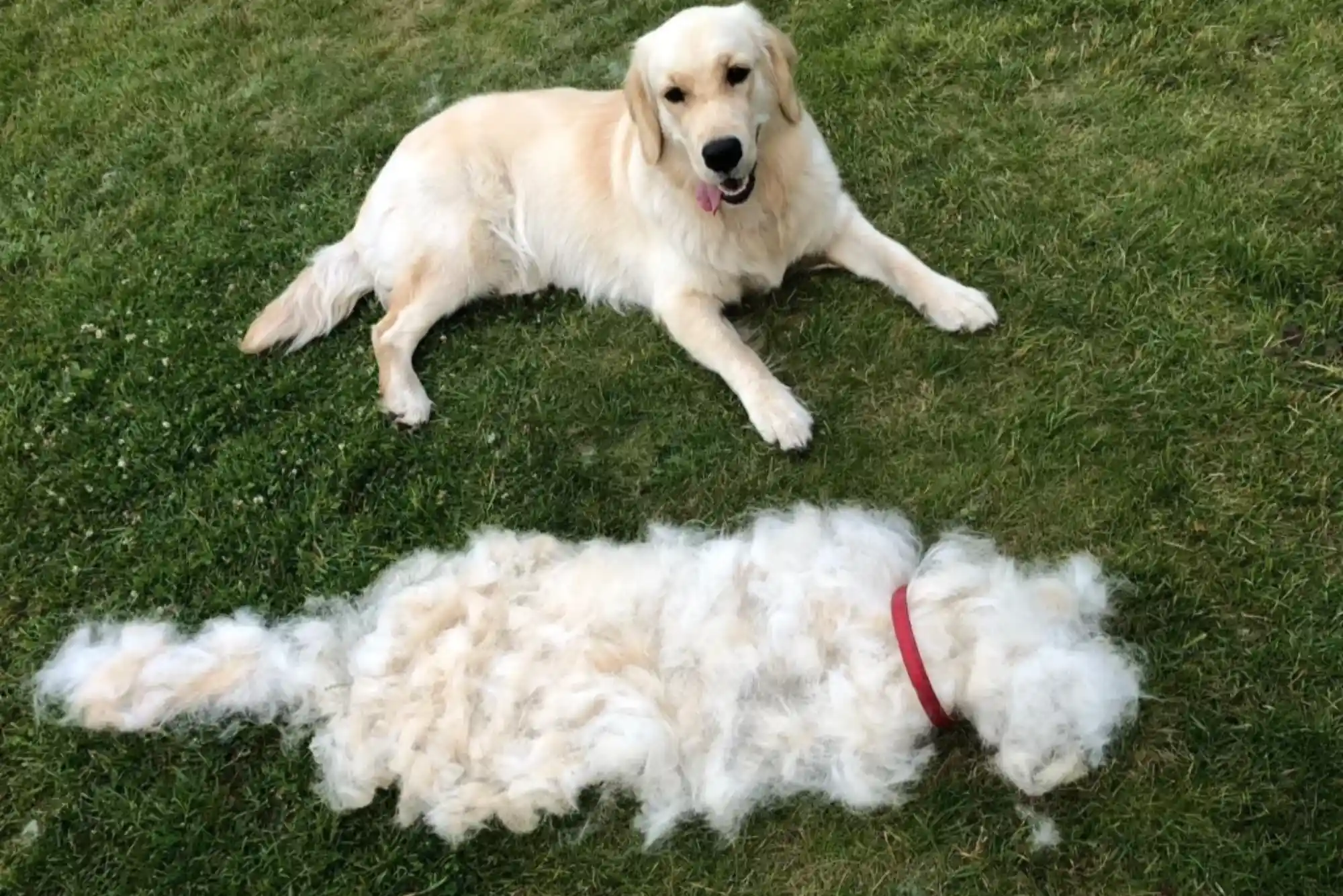
Golden Retrievers are famous for their beautiful golden coats, but that gorgeous fur comes with a predictable challenge: shedding. Golden Retriever shedding season can turn a normally tidy home into a constant battle with loose hair, especially when your dog starts blowing its undercoat.
The good news is that shedding is not something you need to eliminate. It is a normal part of maintaining a healthy coat. Golden Retrievers have a dense double coat that sheds throughout the year, with heavier periods typically occurring during seasonal coat changes.
Understanding Golden Retriever shedding season makes the process much easier to manage. With the right brushing schedule, appropriate grooming tools, sensible bathing, good nutrition, and regular skin checks, you can significantly reduce the amount of loose fur that ends up on your furniture and floors.
Why Golden Retrievers Shed So Much
The main reason Golden Retrievers shed heavily is their double coat. Instead of having one simple layer of hair, a Golden has a protective outer coat and a softer, dense undercoat.
The outer coat contains longer guard hairs that help protect the dog from moisture, dirt, and environmental exposure. Beneath it is the insulating undercoat. This softer layer is responsible for much of the dramatic fur loss owners notice during seasonal changes.
Shedding allows old or damaged hairs to leave the coat so new hair can grow. Therefore, seeing loose hair does not automatically mean that your dog has a health problem.


The important distinction is between normal shedding and abnormal hair loss. A healthy Golden may leave fur on clothing, bedding, carpets, and furniture every day. During Golden Retriever shedding season, however, the volume can increase substantially.
Trying to stop the process completely is neither realistic nor desirable. The goal should be to remove loose hair before it spreads throughout your home while keeping the skin and remaining coat healthy.
When Is Golden Retriever Shedding Season?
For many Golden Retrievers, the heaviest shedding occurs during spring and fall. These periods are often called “coat blowing” seasons because large amounts of undercoat are released as the dog transitions between seasonal coats.
During spring, a Golden may shed more of its dense winter undercoat as temperatures become warmer. In autumn, another heavy shedding period can occur as the coat changes in preparation for colder weather.
The exact timing is not identical for every dog. Climate, daylight exposure, indoor living conditions, age, coat density, and individual biology can all influence shedding patterns. Dogs living in consistently warm environments may not follow the classic spring-and-fall pattern as closely. AKC notes that double-coated dogs can shed more frequently in warmer climates.
That is why it is better to watch your individual dog’s coat rather than relying only on a calendar.
When you notice noticeably more loose fur, tufts coming out during brushing, or increased hair around the house, it is usually time to increase your grooming frequency.
How to Reduce Golden Retriever Shedding
You cannot completely stop Golden Retriever shedding, but you can control where and when loose hair comes out.
The most effective approach is consistent grooming. Instead of allowing detached undercoat to fall naturally onto your floors and furniture, regular brushing captures much of it while it is still in the coat.
During normal periods, many Goldens can be maintained with regular weekly brushing. When shedding becomes heavy, brushing may need to become a daily activity. The American Kennel Club specifically recommends more frequent brushing during heavy shedding and notes that a pin brush can help remove dead hair from the thick coat.
Consistency matters more than trying to remove an enormous amount of hair in one session.
Choose the Right Brush
A brush needs to reach through the outer coat without damaging the skin or unnecessarily cutting healthy hair.
A pin brush is useful for working through the coat and collecting loose fur. An undercoat rake or suitable de-shedding tool can help remove loose undercoat during heavy shedding periods. A comb is also useful around areas where feathering can become tangled, including behind the ears, around the chest, legs, and tail.
The goal is not to aggressively strip the coat. Work gently and methodically, allowing the tool to collect loose hair rather than repeatedly pulling at healthy, attached hair.
If your Golden becomes uncomfortable, stop and inspect the skin. Grooming should never be painful.
Brush Before Bathing
Brushing before bathing is an important part of Golden Retriever shedding season care.
Loose hair and small tangles can become harder to manage once they are wet. Removing excess fur beforehand makes bathing easier and helps prevent loose hair from accumulating in the coat.
The AKC recommends brushing before bathing and thoroughly wetting the coat down to the skin before applying an appropriate canine shampoo. Because a Golden’s double coat can retain shampoo, thorough rinsing is especially important.
After bathing, dry the coat carefully and brush it as it dries. If you use a dryer, choose equipment designed for dogs and avoid excessive heat.
Does Bathing Reduce Golden Retriever Shedding?
Bathing can help remove loose hair, dirt, and debris, but it should not be viewed as a way to permanently stop shedding.
A properly performed bath can loosen dead hairs that are already ready to leave the coat. Brushing and drying afterward can then remove additional loose fur.
The important point is to avoid excessive bathing. Too much washing can interfere with the skin’s natural oils and may contribute to dryness or irritation.
Use a shampoo formulated specifically for dogs rather than household or human products. If your Golden has recurring itching, redness, dandruff, odor, or other skin changes, talk with your veterinarian rather than repeatedly bathing in an attempt to solve the problem.
Nutrition and Golden Retriever Shedding
A healthy coat starts from the inside as well as the outside.
Your Golden Retriever needs a complete and balanced diet appropriate for its age, size, activity level, and overall health. Adequate protein and essential nutrients support normal skin and hair growth.
However, be careful with the idea that a particular supplement will magically stop Golden Retriever shedding. Shedding is primarily a normal biological process associated with the coat cycle.
If your dog’s coat suddenly becomes dull, brittle, unusually thin, or accompanied by skin problems, nutrition may be one factor worth investigating with a veterinarian. Underlying medical conditions can also affect coat quality.
Avoid adding supplements simply because they are marketed for shedding. A veterinarian can help determine whether your dog actually needs one.
Should You Shave a Golden Retriever During Shedding Season?
Shaving is not an appropriate solution for normal Golden Retriever shedding season.
Golden Retrievers have a functional double coat. The outer layer provides protection while the undercoat contributes to insulation and temperature regulation. Removing that coat does not solve the underlying shedding cycle.
The AKC advises against shaving double-coated dogs as a method of keeping them cool or reducing shedding. Removing the outer coat can reduce protection from the sun and may interfere with normal coat regrowth.
Instead of shaving, focus on regular brushing and appropriate coat maintenance.
If your Golden has severe matting or a medical condition requiring clipping, follow professional veterinary or grooming advice.
How to Keep Golden Retriever Fur Under Control at Home
Even the best grooming routine will not make a Golden Retriever completely hair-free.
The practical strategy is to make fur management part of your normal household routine. Regular vacuuming, washing dog bedding, and brushing your Golden in an easy-to-clean location can make a noticeable difference.
Outdoor brushing can be particularly convenient when weather permits. It allows loose fur to disperse rather than accumulating inside the house.
Furniture covers can also help in homes where the dog regularly sleeps on sofas or chairs. Washable bedding is easier to maintain than materials that trap large amounts of fur.
Most importantly, do not wait until the peak of Golden Retriever shedding season to start grooming. A consistent routine throughout the year means there is less loose undercoat waiting to come out when seasonal shedding intensifies.
When Golden Retriever Shedding May Be a Health Concern
Heavy shedding by itself is usually not a reason to panic. However, changes in the pattern or condition of the coat deserve attention.
Sudden hair loss, bald patches, persistent scratching, red skin, sores, excessive dandruff, unpleasant skin odor, or frequent licking can indicate a problem that needs professional evaluation.
Allergies, parasites, skin infections, nutritional problems, hormonal disorders, and other medical conditions can affect a dog’s skin and coat.
There is an important difference between a Golden releasing large amounts of loose hair evenly across its body and a Golden developing visible areas of thinning or baldness.
If the shedding looks dramatically different from your dog’s normal pattern, especially when accompanied by skin changes or behavioral discomfort, schedule a veterinary examination.
A Simple Golden Retriever Shedding Season Routine
A practical grooming routine should change with the coat rather than remain exactly the same throughout the year.
During ordinary shedding, maintain regular brushing and inspect the coat for tangles, debris, and skin changes. When Golden Retriever shedding season arrives, increase brushing frequency and spend additional time reaching the undercoat.
Brush gently from the outer coat toward the deeper layers. Pay particular attention to areas with feathering because loose hair can accumulate there. Follow brushing with a comb where necessary.
Bathing can be incorporated into the dog’s normal grooming schedule when needed, followed by thorough drying and brushing.
This routine does more than reduce fur around the house. It also gives you an opportunity to notice lumps, irritated skin, parasites, or other changes before they become more serious. Regular grooming can therefore contribute to better overall coat monitoring.
Common Golden Retriever Shedding Mistakes
One of the most common mistakes is trying to solve shedding with increasingly aggressive brushing.
More pressure does not necessarily mean better grooming. Excessive force can irritate the skin and make the experience unpleasant for the dog.
Another mistake is using the wrong tool. A brush that only works on the surface may leave substantial loose undercoat underneath. Conversely, aggressive de-shedding tools can be misused and potentially damage healthy coat.
Overbathing is another common problem. Clean does not always mean healthier when bathing is excessive.
Finally, shaving a Golden because of shedding is usually unnecessary. The double coat serves important protective functions, so managing it is preferable to removing it.
Make Golden Retriever Shedding Manageable
Golden Retriever shedding season is an unavoidable part of life with this beautiful double-coated breed, but it does not have to take over your home.
The most effective strategy is surprisingly simple: brush consistently, increase grooming when seasonal shedding intensifies, use tools designed for a double coat, bathe appropriately, support your dog’s overall health, and avoid shaving.
Think of grooming as managing loose hair rather than trying to eliminate shedding. When you regularly remove dead undercoat before it reaches your sofa, carpet, and clothing, the difference can be substantial.
FAQs
Do Golden Retrievers shed a lot?
Yes. Golden Retrievers are naturally moderate-to-heavy shedders because they have a dense double coat. They shed throughout the year, with more noticeable shedding during seasonal coat changes. Regular brushing helps capture loose fur before it spreads around the home.
When do Golden Retrievers shed the most?
Golden Retrievers commonly experience heavier shedding during spring and fall. These seasonal coat changes are often called coat blowing. However, the exact timing and intensity can vary depending on the individual dog, climate, and living environment.
How can I reduce my Golden Retriever’s shedding?
You cannot completely stop normal shedding, but you can reduce loose fur around your home through consistent brushing, appropriate grooming tools, sensible bathing, good nutrition, and regular coat maintenance. During heavy shedding periods, increasing brushing frequency can make a substantial practical difference.
What is the best brush for a Golden Retriever?
There is no single brush that works identically for every Golden. A pin brush is useful for the main coat, while an appropriate undercoat tool can help during heavy shedding. A comb is helpful for feathered areas such as behind the ears, chest, legs, and tail.
Should I shave my Golden Retriever to stop shedding?
No. Shaving does not stop the biological shedding cycle and can remove protective parts of the dog’s double coat. The outer coat helps protect against environmental exposure and sunlight, while the overall coat contributes to temperature regulation.
How often should I brush my Golden Retriever during shedding season?
The ideal frequency depends on the individual coat and how heavily the dog is shedding. Weekly brushing may be suitable during lighter periods, while daily brushing can be useful when shedding becomes heavy. The AKC specifically recommends daily pin-brush grooming for heavy shedding.
Why is my Golden Retriever suddenly shedding more than usual?
A seasonal increase can be completely normal, particularly during spring or fall. However, sudden shedding accompanied by bald spots, itching, redness, skin odor, sores, or other changes should be discussed with a veterinarian because medical or skin conditions can also affect hair loss.