Introduction
Socializing a reactive dog can feel challenging, especially when barking, lunging, growling, or pulling starts around other dogs. However, reactivity does not mean your dog cannot learn better social skills. With the right approach, many reactive dogs can become calmer and more confident.
Learning how to socialize a reactive dog with other dogs safely requires patience and careful planning. The goal is not to make your dog greet every dog they see. Instead, you want your dog to remain comfortable around other dogs.
Successful socialization happens gradually. It also depends on understanding your dog’s triggers, body language, and comfort level. Rushing the process can increase fear and frustration.
Therefore, controlled exposure is usually more helpful than forcing direct interactions. Positive experiences can gradually change how your dog responds to other dogs.
Understanding Dog Reactivity
Before learning how to socialize a reactive dog with other dogs safely, understand what reactivity means. A reactive dog responds strongly to particular situations or triggers.
Some dogs react because they feel frightened or uncertain. Others become frustrated because they cannot reach another dog. Some may react because of previous negative experiences.


Reactivity does not automatically mean aggression. A dog barking and lunging may actually be trying to create distance.
Understanding the reason behind the behavior helps you choose an appropriate training approach. It also prevents you from punishing behavior that may come from fear.
Why Reactive Dogs Struggle Around Other Dogs
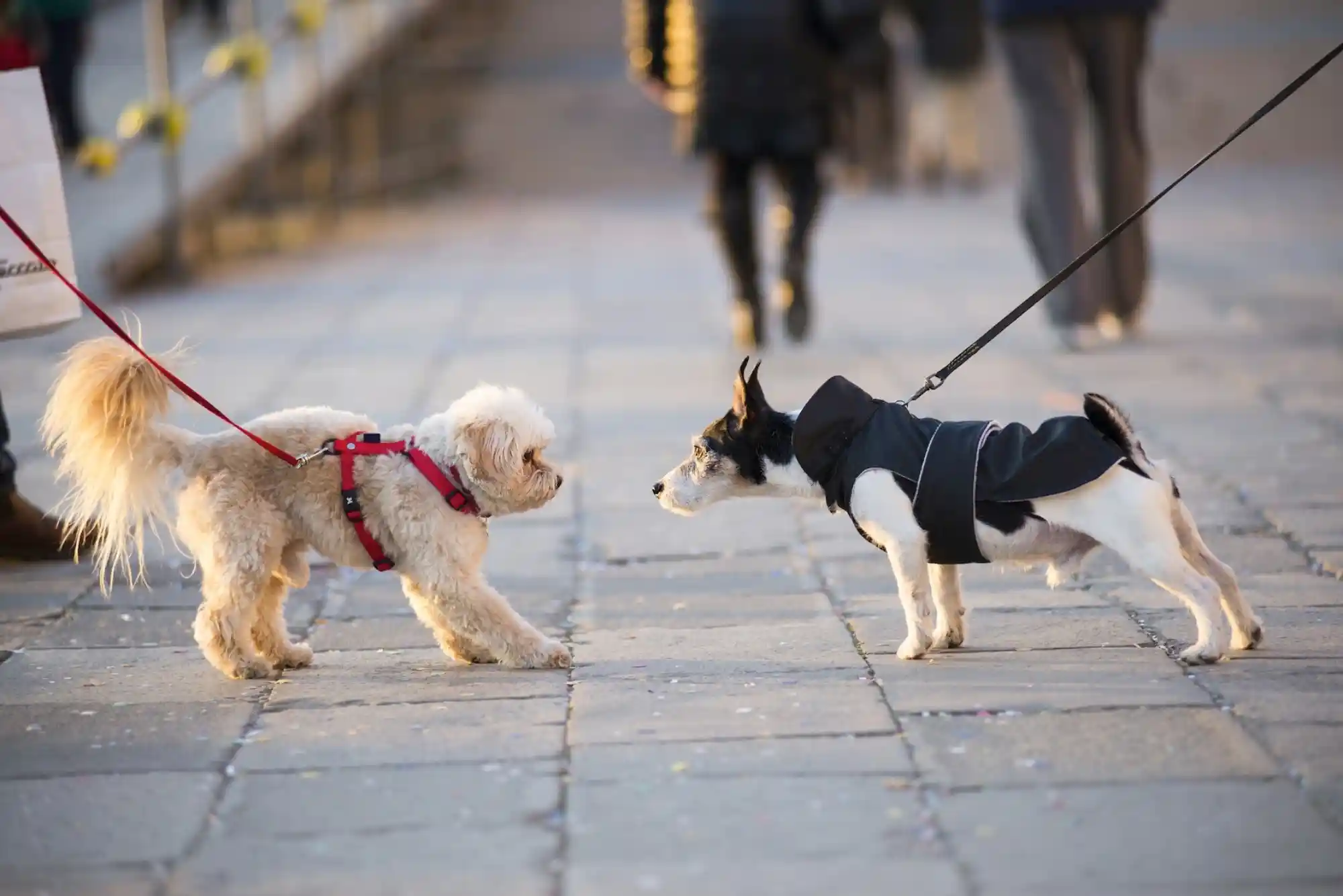
Dogs communicate through body language, scent, movement, and vocal signals. A reactive dog may become overwhelmed when another dog approaches too quickly.
For example, direct eye contact can feel threatening to some dogs. A fast-moving dog may also trigger an intense response.
Tight spaces can create additional pressure. Sidewalks, elevators, narrow paths, and busy dog parks can leave little room for avoidance.
Some reactive dogs also struggle because they have learned that barking makes another dog move away. As a result, the behavior becomes stronger over time.
Start by Identifying Your Dog’s Triggers
Every reactive dog has different triggers. Your dog may react only to large dogs, unfamiliar dogs, energetic puppies, or dogs approaching head-on.
Observe what happens before your dog reacts. Notice their posture, facial expression, ears, tail, and movement.
Early warning signs can include staring, stiffening, lip licking, turning away, yawning, or slowing down. Recognizing these signals gives you time to increase distance.
This is an important part of learning how to socialize a reactive dog with other dogs safely. You should intervene before your dog becomes overwhelmed.
Find Your Dog’s Comfortable Distance
Distance is one of the most useful tools for reactive dog training. Your dog needs enough space to notice another dog without immediately reacting.
This distance is sometimes called the threshold. Below the threshold, your dog can still think and respond to you.
For some dogs, the necessary distance may initially be quite large. That is completely acceptable.
Over time, successful training can gradually reduce that distance. However, progress should be based on your dog’s behavior rather than a fixed schedule.
If your dog starts barking, lunging, or freezing, increase the distance again. Returning to a comfortable level is not failure. It is part of effective training.
Use Positive Reinforcement
Positive reinforcement can help your dog develop a different emotional response to other dogs.
When your dog notices another dog while remaining calm, reward them. You can use small treats, praise, toys, or another reward your dog values.
The timing matters. Reward your dog while they are still calm.
For example, your dog sees another dog from across the street. They look at the dog and then look back at you. Reward that calm response.
With repetition, your dog can begin associating other dogs with positive experiences.
Practice Parallel Walking
Parallel walking is often more manageable than face-to-face greetings. It allows two dogs to move in the same direction without forcing immediate interaction.
Start with plenty of distance between the dogs. Both handlers should maintain relaxed movement and avoid pulling toward each other.
As the dogs become more comfortable, the distance can gradually decrease. Keep watching their body language throughout the exercise.
A calm walk does not require the dogs to touch or play. Simply being comfortable near another dog can be meaningful progress.
Choose the Right Dog for Practice
When learning how to socialize a reactive dog with other dogs safely, your choice of training partner matters.
A calm, stable, socially appropriate dog can provide a better learning environment. Avoid using an excitable dog that constantly rushes toward your dog.
The other dog’s owner should also understand the training process. They should be willing to maintain distance and follow your agreed plan.
A controlled environment is usually safer than a crowded dog park. Predictable surroundings make it easier to manage your dog’s reactions.
Avoid Forced Greetings
Many people assume dogs need to greet each other to become socialized. This is not necessarily true.
Forcing a reactive dog into close contact can increase fear or frustration. It may also create a negative association with other dogs.
Instead, allow your dog to observe from a safe distance. Reward calm behavior and gradually increase exposure when appropriate.
If your dog chooses to move away, respect that choice. Giving your dog appropriate space can build confidence.
Learn to Read Canine Body Language
Body language provides valuable information about your dog’s emotional state.
A relaxed dog may have loose muscles, natural movement, and a soft facial expression. A stressed dog may become stiff, stare intensely, hold their breath, or shift their weight.
Watch for changes before a reaction occurs. Early intervention is much easier than trying to regain control after a major outburst.
You should also watch the other dog. A dog that is stiff, staring, growling, or repeatedly attempting to escape may not be suitable for a socialization session.
Keep Training Sessions Short
Long sessions can cause mental and emotional fatigue. Reactive dogs often benefit from short, successful training sessions.
End the session while your dog is still coping well. This helps prevent overwhelming experiences.
Several calm sessions can be more productive than one long session. Consistency matters more than speed.
As your dog’s confidence improves, you can gradually increase the duration and difficulty.
Manage Your Environment
Good management can prevent unnecessary reactions while training continues. Choose quieter walking routes when possible.
Avoid crowded areas where dogs may suddenly appear from behind corners. Give yourself room to move away when needed.
You can also cross the street, turn around, or use parked cars as visual barriers. These simple strategies can help your dog remain below threshold.
Management is not a replacement for training. Instead, it protects your progress while your dog learns new responses.
Teach an Alternative Behavior
Your dog needs something appropriate to do when another dog appears.
A reliable attention cue can help redirect your dog’s focus. You can teach your dog to look at you, walk beside you, or follow a hand target.
Practice these behaviors in calm environments first. Once your dog understands them, gradually introduce mild distractions.
Eventually, you can use these skills when another dog appears at a manageable distance.
The goal is not perfect obedience during every encounter. The goal is giving your dog useful options when they feel uncertain.
Know When to Increase Distance
One of the most important principles in how to socialize a reactive dog with other dogs safely is knowing when to step back.
If your dog stops responding to familiar cues, the situation may be too difficult. Increased panting, stiff posture, intense staring, barking, or lunging can signal rising stress.
Do not wait for a full reaction before changing the situation. Move farther away and allow your dog to settle.
Training should remain challenging enough to encourage learning but not so difficult that your dog becomes overwhelmed.
Consider Professional Help
Some reactive dogs need individualized guidance from a qualified professional. This is particularly important when reactions are intense or involve attempted bites.
A veterinarian can also help identify medical factors that may contribute to behavioral changes. Pain, illness, or other physical problems can affect behavior.
A qualified reward-based behavior professional can evaluate your dog’s triggers and create a structured training plan.
Professional support can also help you improve handling skills and recognize subtle body-language signals.
Common Mistakes to Avoid
Several common mistakes can make socialization harder. One is moving too quickly.
Another is allowing repeated uncontrolled greetings. Every overwhelming encounter can make future reactions more difficult.
Punishing barking or growling can also create problems. These behaviors provide useful information about your dog’s emotional state.
Instead, focus on changing the underlying response and managing the environment.
Finally, avoid comparing your dog with other dogs. Every dog progresses at a different pace.
How Long Does Reactive Dog Socialization Take?
There is no universal timeline for socializing a reactive dog. Some dogs show noticeable improvement within weeks, while others need several months of consistent training.
Progress depends on the dog’s history, temperament, triggers, environment, and training consistency.
Small improvements are worth recognizing. A dog that previously reacted at 100 feet may eventually remain calm at 50 feet.
Focus on steady progress rather than expecting immediate results.
Can a Reactive Dog Ever Play With Other Dogs?
Some reactive dogs eventually enjoy playing with carefully selected dogs. Others may prefer simply walking near dogs without direct interaction.
Both outcomes can represent successful socialization.
Your goal should be emotional comfort and safe behavior. Your dog does not need to become a social butterfly.
If direct play is appropriate, introduce it gradually and under controlled conditions. Closely monitor both dogs throughout the interaction.
Frequently Asked Questions
How do I socialize a reactive dog with other dogs?
Start at a distance where your dog can see another dog without reacting. Reward calm behavior and gradually reduce the distance over time.
Avoid forced greetings and crowded environments. Consistent, controlled exposure is usually more effective.
Can a reactive dog become friendly with other dogs?
Yes, some reactive dogs become much more comfortable around other dogs. However, the amount of improvement varies between individual dogs.
Some dogs may eventually play with selected companions. Others may simply learn to remain calm when dogs are nearby.
Should I let my reactive dog meet other dogs?
Direct greetings are not always necessary. If your dog becomes uncomfortable, increasing distance may be more appropriate.
Controlled parallel walks can provide useful social experiences without forcing close contact.
How do you calm a reactive dog around other dogs?
Create more distance from the trigger and help your dog focus on you. Reward calm behavior before the reaction becomes intense.
Avoid punishment and allow your dog time to recover.
Is dog reactivity the same as aggression?
No. Reactivity and aggression are not identical. Reactive behavior can result from fear, frustration, excitement, or other emotional responses.
However, reactive behavior can sometimes create safety risks. Severe reactions should be assessed by an appropriate professional.
Conclusion
Learning how to socialize a reactive dog with other dogs safely requires patience, observation, and consistent management. The process should focus on helping your dog feel secure rather than forcing social interaction.