
Introduction
Finding the right dog can be challenging when someone in the family has pet allergies. Fortunately, some breeds may be easier for allergy sufferers to live with. The Top 7 Hypoallergenic Dog Breeds for Families with Pet Allergies include dogs known for low-shedding coats and manageable grooming needs.
However, it is important to understand what “hypoallergenic” really means. No dog is completely allergy-free. Dog allergies can involve dander, saliva, skin particles, and other allergens. Therefore, even breeds that shed very little can still cause symptoms.
The best approach combines careful breed selection with sensible grooming and household cleaning. Families should also spend time around a particular dog before making a long-term commitment. Individual reactions can vary considerably.
What Does Hypoallergenic Mean for Dogs?
The term hypoallergenic does not mean allergen-free. Instead, it generally describes breeds that may produce or spread fewer allergens than heavily shedding dogs.
Some low-shedding breeds have coats that continuously grow rather than regularly shedding large amounts of hair. This can reduce loose hair around the home. Nevertheless, allergens can still be present on the dog’s skin, coat, and saliva.
Research has also challenged the idea that so-called hypoallergenic dogs always produce fewer allergens. Individual dogs can vary, and people can react differently to different animals.


For this reason, families should consider the Top 7 Hypoallergenic Dog Breeds for Families with Pet Allergies as potentially lower-allergen choices rather than guaranteed solutions.
Top 7 Hypoallergenic Dog Breeds for Families with Pet Allergies
1. Poodle
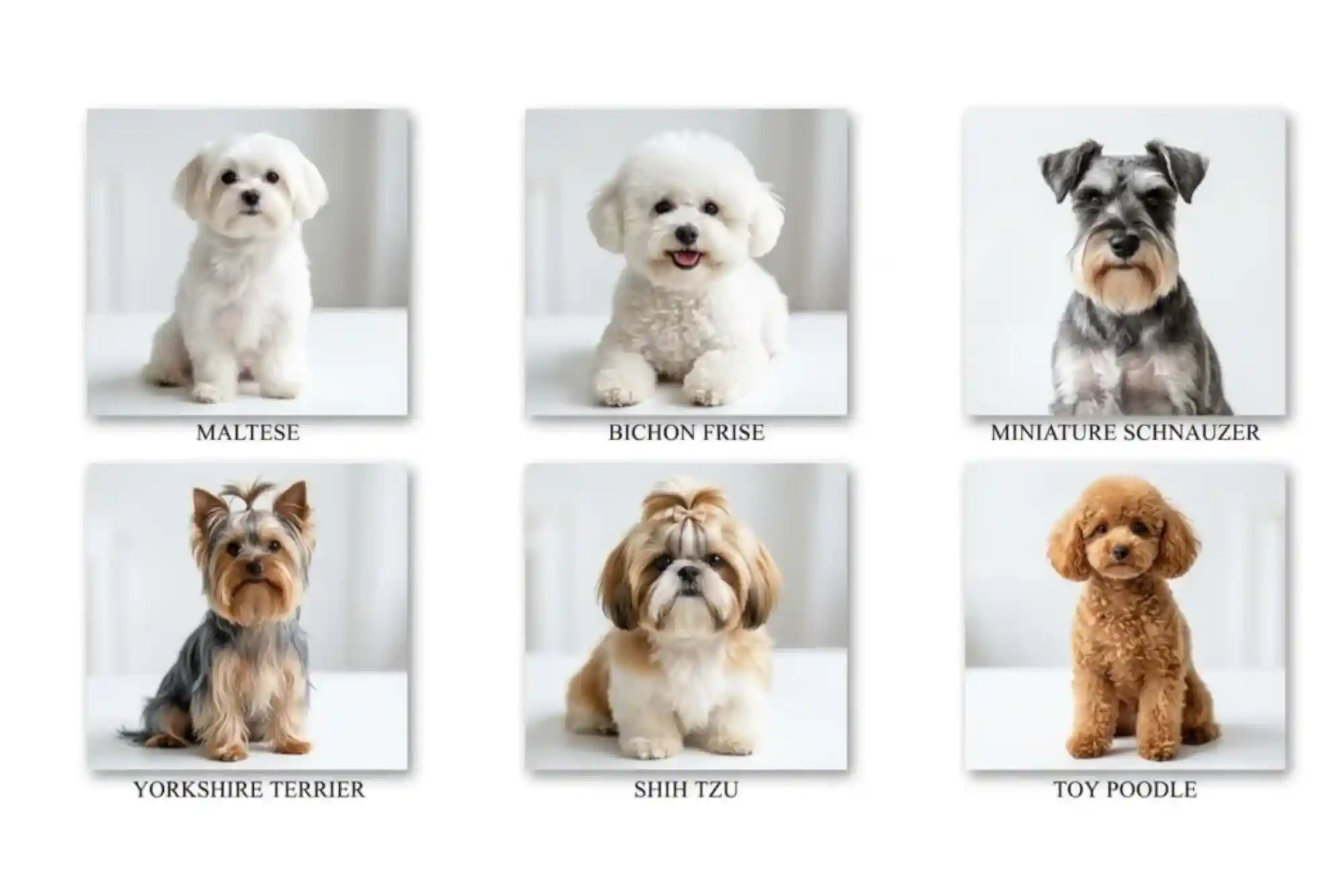
Poodles are among the most recognized choices for families concerned about allergies. They are available in Toy, Miniature, and Standard sizes. This variety makes it easier to find a dog that fits different household environments.
Their curly coat sheds minimally compared with many traditional breeds. However, that coat requires regular brushing and professional grooming. Without proper care, it can become tangled and difficult to maintain.
Poodles are also intelligent, active, and highly trainable. They often enjoy learning commands, tricks, and interactive games. Therefore, they can be excellent companions for families that have time for daily activity.
Their intelligence also means they need mental stimulation. Puzzle toys, training sessions, and structured play can help prevent boredom.
Although Poodles are often recommended for allergy sufferers, they are not completely hypoallergenic. Some people can still experience significant symptoms around them.
2. Bichon Frise
The Bichon Frise is a small companion dog with a soft, curly coat. Its hair grows continuously and does not shed heavily in the same way as many double-coated breeds.
This characteristic can make the Bichon Frise an appealing option for families concerned about loose hair. Regular grooming remains essential, however. Brushing helps prevent mats and keeps the coat in good condition.
Bichons are generally cheerful and playful dogs. Their small size can also make them suitable for apartments and smaller homes.
Families with children should still teach respectful handling. Small dogs can be injured by rough play, even when they have friendly personalities.
For households seeking a social companion, the Bichon can be an attractive choice. However, allergy sufferers should spend time with the individual dog before adopting.
3. Miniature Schnauzer
The Miniature Schnauzer is another popular low-shedding breed. It has a distinctive wiry coat and a recognizable beard and eyebrows.
These dogs are intelligent, energetic, and often very engaged with their families. Their manageable size makes them suitable for many homes.
Their coat requires regular brushing and trimming. Professional grooming can help maintain its appearance and remove loose hair before it accumulates around the home.
Miniature Schnauzers can also be alert watchdogs. Early socialization is useful because it helps young dogs become comfortable with different people, animals, and environments.
For active families, this breed can provide companionship without the heavy shedding associated with many other dogs.
Still, low shedding does not eliminate allergens. A family member with significant allergies should test their reaction before bringing one home.
4. Portuguese Water Dog
The Portuguese Water Dog offers an option for families wanting a larger, active companion. This athletic breed is known for its curly or wavy coat and relatively low shedding.
Portuguese Water Dogs were historically associated with working around water. Consequently, they tend to have substantial energy and enjoy physical activity.
They can be excellent companions for families that enjoy walking, outdoor games, swimming, or other activities. However, their exercise requirements should not be underestimated.
Their coat also needs consistent maintenance. Regular brushing and professional grooming can help keep the coat manageable.
Because this breed is energetic, it may not be ideal for a family seeking a very relaxed household companion. Lifestyle compatibility matters just as much as allergy considerations.
5. Maltese
The Maltese is a small companion breed recognized for its long, silky coat. Despite its flowing hair, it is considered a low-shedding breed and is frequently discussed among dogs suitable for people with allergies.
Maltese dogs can adapt well to smaller living spaces. They also tend to form strong bonds with their families.
Their coat needs regular brushing to prevent tangles. Families choosing a shorter haircut may find everyday maintenance easier.
Because of their small size, Maltese dogs should be handled carefully around young children. Supervised interaction is especially important when children are still learning how to behave around pets.
A Maltese can be a loving family companion, but its low-shedding coat should not be interpreted as an allergy guarantee.
6. Shih Tzu
The Shih Tzu is another small breed frequently considered by allergy-conscious families. Its long coat grows continuously and generally does not shed heavily.
Many owners choose regular professional grooming because a shorter coat is easier to maintain. Daily brushing may still be necessary when the coat is kept long.
Shih Tzus are generally companion-oriented dogs. They often enjoy staying close to their people rather than spending long periods alone.
Their exercise requirements are usually moderate. Short walks and indoor play can provide useful activity.
Families should remember that individual allergy responses vary. Spending time with a Shih Tzu before adoption can provide useful information about personal sensitivity.
7. Soft Coated Wheaten Terrier
The Soft Coated Wheaten Terrier is a medium-sized breed with a soft, silky coat. It is commonly included among breeds that may work better for some allergy sufferers.
Wheatens are energetic and can enjoy active family life. They often benefit from regular walks, play, and training.
Their coat requires consistent grooming. Without regular brushing, it can develop mats that are difficult to remove.
Families should also provide early socialization and training. A well-structured routine can help an energetic dog adjust successfully to household life.
The breed can be a good consideration for families wanting something larger than a typical lapdog. However, its energy level should match the family’s daily routine.
How to Choose the Right Hypoallergenic Dog
Choosing among the Top 7 Hypoallergenic Dog Breeds for Families with Pet Allergies should involve more than looking at shedding levels.
First, consider the family’s lifestyle. An active household may enjoy a Portuguese Water Dog or Poodle. A quieter household may prefer a smaller companion breed.
Next, consider grooming requirements. Low-shedding coats often require more maintenance rather than less. Regular brushing, bathing, trimming, and professional grooming can become part of the household routine.
Temperament is equally important. Families with children should consider the dog’s size, energy level, sociability, and training needs.
Most importantly, test allergy sensitivity before adoption. Spending several hours with an individual dog can provide useful information. AKC also recommends visiting with a dog before making a commitment when allergies are a concern.
How to Reduce Dog Allergens at Home
Selecting a low-shedding breed is only one part of allergy management. Keeping allergens under control throughout the home can also help.
Regular grooming is important because loose hair, skin particles, and debris can accumulate in living spaces. Whenever possible, grooming should be performed by someone who does not have significant allergies.
Washing dog bedding regularly can also reduce accumulated allergens. Families may additionally benefit from limiting the dog’s access to bedrooms.
Hard flooring can be easier to clean than carpets. Carpets, upholstered furniture, curtains, and other fabrics can collect allergens.
Regular vacuuming is another useful household habit. A vacuum with appropriate filtration can help remove particles from floors and furnishings.
Mayo Clinic also recommends creating pet-free areas, such as bedrooms, and reducing allergen-trapping furnishings when managing pet allergies.
Are Hairless Dogs Better for Allergy Sufferers?
Hairless dogs are sometimes assumed to be completely safe for people with allergies. That is not accurate.
Allergy triggers are not limited to hair. Dogs can produce allergens through dander, saliva, and skin-related substances. Therefore, removing most body hair does not remove every potential trigger.
Some people may tolerate particular hairless dogs better than heavily shedding breeds. However, the response remains individual.
Families should therefore focus on personal tolerance rather than relying solely on a breed label.
Can Families Have Dogs Despite Pet Allergies?
For some families, careful allergen management can make dog ownership more manageable. However, the severity of the allergy matters.
People with significant reactions should speak with a qualified healthcare professional before bringing a dog home. Allergy testing can help identify sensitivities and guide exposure-management decisions.
Families should also remember that allergens can remain in an environment after an animal leaves. Therefore, controlling exposure is often more complicated than simply choosing a low-shedding breed.
A thoughtful approach gives everyone in the household a better chance of enjoying life with a dog.
Frequently Asked Questions
Are any dogs truly hypoallergenic?
No dog breed is completely hypoallergenic. All dogs can produce allergens, although some low-shedding breeds may be easier for certain allergy sufferers to tolerate.
What is the best hypoallergenic dog for a family?
There is no universally best breed for every family. Poodles, Bichon Frises, Miniature Schnauzers, Portuguese Water Dogs, Maltese, Shih Tzus, and Soft Coated Wheaten Terriers are commonly considered lower-shedding options.
The right choice depends on allergies, family lifestyle, grooming expectations, activity level, and temperament.
Are Poodles completely hypoallergenic?
No. Poodles shed relatively little and are commonly recommended for allergy sufferers. However, they still produce allergens and can cause symptoms in sensitive individuals.
Can dog grooming reduce allergies?
Regular grooming can help manage loose hair and allergen buildup. However, grooming does not make a dog allergen-free. Families should combine grooming with cleaning and exposure-management strategies.
Should I get allergy tested before getting a dog?
Professional allergy testing can be helpful when someone has suspected pet allergies. It can identify relevant allergens and help a healthcare professional recommend appropriate management strategies.
Conclusion
The Top 7 Hypoallergenic Dog Breeds for Families with Pet Allergies can provide several possibilities for households looking for a lower-shedding companion. Poodles, Bichon Frises, Miniature Schnauzers, Portuguese Water Dogs, Maltese, Shih Tzus, and Soft Coated Wheaten Terriers are all commonly considered.