
Introduction
If your dog suddenly starts shaking their head, scratching one ear, or developing an unusual smell around the ears, an ear infection could be the reason. Recognizing the signs of dog ear infections early can help prevent discomfort and reduce the risk of the problem becoming chronic.
Dog ear infections, medically known as otitis externa when they affect the outer ear canal, can be caused by bacteria, yeast, parasites, allergies, moisture, foreign objects, or changes in the ear canal. Bacterial and yeast overgrowth are particularly common, and both can produce similar symptoms. That makes it difficult to determine the exact cause simply by looking at the ear.
A veterinarian can examine the ear canal and use cytology to identify yeast, bacteria, inflammatory cells, or other problems. This is important because treatment for a bacterial infection is different from treatment for a yeast infection.
Understanding the warning signs, knowing what home cleaning can safely accomplish, and recognizing when professional treatment is needed can make ear problems much easier to manage.
What Are the Signs of Dog Ear Infections?
The first symptoms may be subtle. Some dogs simply scratch an ear more often than usual, while others develop obvious pain, discharge, or a strong odor.
Common signs of dog ear infections include:


Frequent Head Shaking
Repeated head shaking is one of the most noticeable warning signs. Your dog may shake their head after resting, walking, eating, or whenever the affected ear becomes uncomfortable.
Occasional head shaking is normal. Persistent or unusually forceful shaking deserves closer attention.
Scratching or Rubbing the Ears
Dogs with irritated ears may repeatedly paw at their ears or rub the side of their face against furniture, carpets, or the floor.
Continued scratching can damage the skin and create additional inflammation.
Redness and Swelling
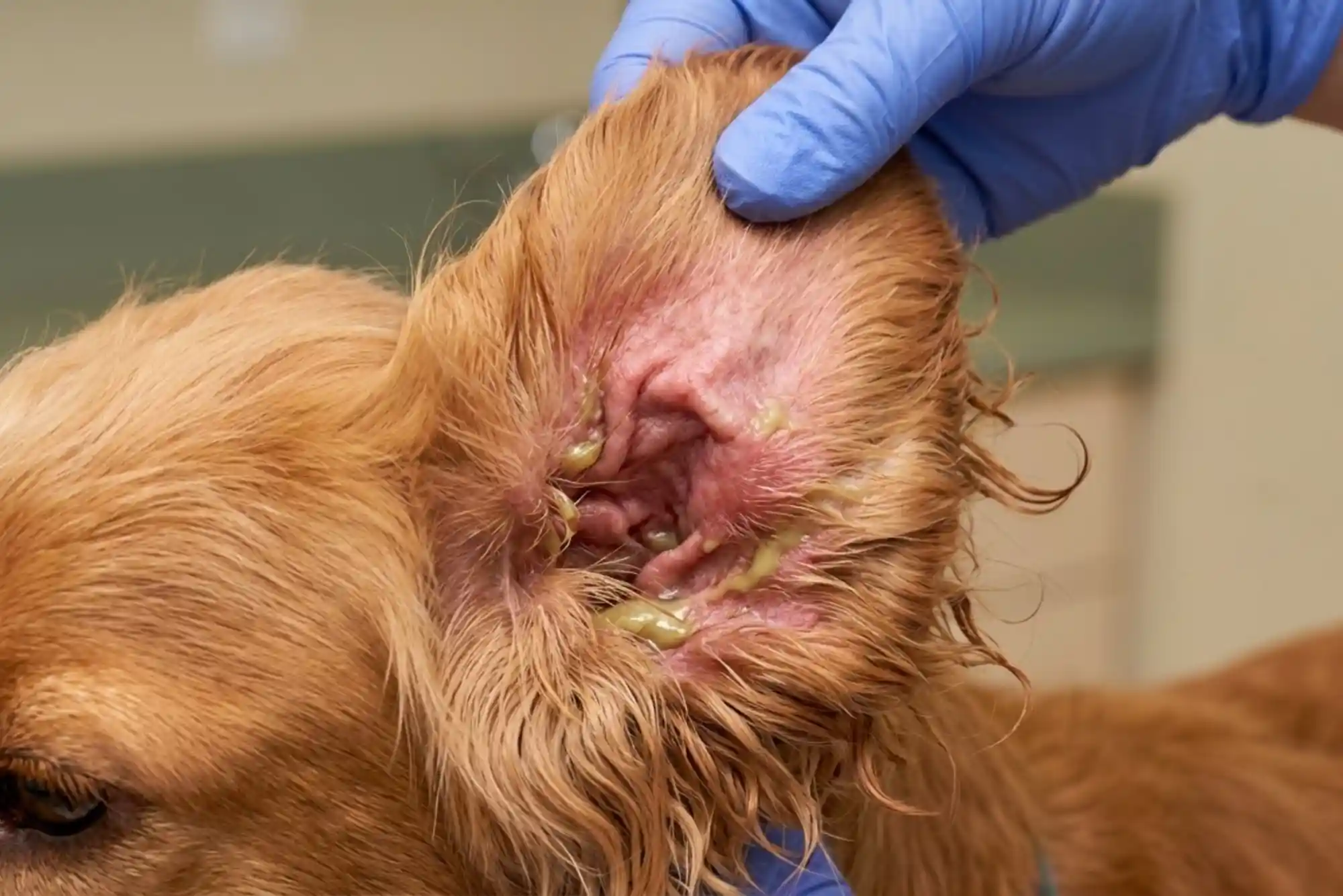
An inflamed ear canal may look red, swollen, or irritated. The inside of the ear flap can also become red, especially when allergies are contributing to the problem.
Unusual Ear Odor
A strong or unpleasant smell is another common warning sign. Odor alone cannot tell you whether an infection is bacterial or caused by yeast, but it indicates that something may be wrong.
Discharge or Excess Wax
You may notice brown, black, yellow, cream-colored, or greenish material. The appearance of discharge can provide clues, but it cannot reliably diagnose the infection.
Pain or Sensitivity
Some dogs become reluctant to have their ears touched. They may pull away, cry, growl, or become unusually defensive when you try to examine them.
Pain is particularly important because aggressive cleaning can make an inflamed ear worse.
Yeast vs Bacterial Dog Ear Infections
One of the most common questions owners ask is whether they are looking at a yeast or bacterial infection.
The difficulty is that there is considerable overlap. Dogs can also have mixed infections, meaning both yeast and bacteria are present at the same time.
Signs That May Occur With Yeast
Yeast overgrowth commonly involves Malassezia. Affected ears may have a dark brown, waxy discharge and a noticeable musty odor.
The ear canal may be red, itchy, and inflamed. Dogs with allergies are particularly prone to secondary yeast ear infections because allergic inflammation changes the ear’s normal protective environment.
However, dark discharge does not automatically mean yeast. Parasites and bacterial infections can sometimes produce similar-looking material.
Signs That May Occur With Bacteria
Bacterial infections can cause considerable inflammation, pain, swelling, and discharge. Some bacterial infections produce yellow, cream, or greenish material, while others may have a particularly unpleasant odor.
Certain bacteria, including Pseudomonas, can be associated with slimy discharge and severe inflammation. Veterinary cytology helps identify the type of organisms involved and guides treatment.
Why Appearance Alone Is Not Enough
It is tempting to diagnose the infection by color or smell, but that approach can lead to the wrong treatment.
Normal dog ears can contain small numbers of microorganisms. Problems develop when the ear environment changes and organisms multiply excessively. A veterinary examination and ear cytology can determine whether yeast, bacteria, parasites, or inflammatory changes are present.
This distinction matters because antibacterial medication will not treat a yeast overgrowth, while an antifungal treatment will not address a bacterial infection.
Why Do Dogs Get Ear Infections?
An ear infection is often more than just a problem inside the ear. There may be an underlying trigger that needs attention.
Allergies
Environmental or food-related allergies can inflame the skin around the ears and make secondary bacterial or yeast infections more likely. Repeated infections are therefore worth discussing with a veterinarian rather than treating as isolated problems.
Moisture
Water trapped inside the ear can alter the ear canal environment and encourage microbial overgrowth. Swimming and bathing can therefore contribute to recurring ear problems, particularly in dogs with ears that do not dry easily.
Ear Shape and Hair
Floppy ears, narrow canals, and certain ear structures can reduce ventilation and make it easier for moisture and debris to remain inside.
Foreign Objects
Grass seeds, plant material, dirt, or other foreign bodies can irritate the ear canal and trigger inflammation. A one-sided or suddenly severe ear problem may require a careful veterinary examination to rule this out.
Underlying Skin or Hormonal Problems
Recurring otitis can sometimes be associated with broader skin disorders or endocrine conditions. Simply treating the infection repeatedly may not solve the underlying problem.
How to Clean Your Dog’s Ears at Home
Home ear cleaning can be useful when your veterinarian has recommended it, particularly for dogs that are prone to recurring ear problems. However, cleaning is not a substitute for diagnosing an active infection.
The safest approach is to use a dog-specific ear-cleaning solution recommended by your veterinarian.
Choose the Right Ear Cleaner
Avoid reaching for household products or homemade mixtures. Veterinary sources specifically caution against irritating remedies such as vinegar mixtures, while products containing alcohol or hydrogen peroxide can irritate inflamed ear tissue.
The appropriate cleaner depends on your dog’s ear condition and whether the eardrum is intact.
Apply the Cleaner Gently
Hold the ear flap upward and apply the recommended ear cleaner without forcing the bottle tip deep into the canal.
Gently massage the base of the ear for around 30 seconds, allowing the cleaning solution to loosen material inside the canal. VCA recommends avoiding contact between the bottle tip and the ear to reduce contamination.
Let your dog shake their head afterward. This helps move loosened debris toward the outer part of the ear.
Wipe Away Visible Debris
Use a clean cotton ball or appropriate gauze to remove material that reaches the visible portion of the ear.
Do not push cotton swabs deep into the ear canal. They can push debris farther inward and potentially irritate or injure the ear.
Do Not Overclean
More cleaning is not always better. Excessive cleaning can irritate the ear canal and contribute to inflammation.
If your dog has recurrent infections, your veterinarian can recommend an appropriate maintenance schedule. Depending on the condition, cleaning frequency may change from daily during treatment to once or twice weekly for maintenance.
What Not to Put in an Infected Dog’s Ear
Home remedies can sound appealing because they are inexpensive and easy to find. Unfortunately, some can make an inflamed ear significantly worse.
Avoid using vinegar mixtures, hydrogen peroxide, alcohol, essential oils, oils, or human ear medications unless your veterinarian specifically instructs you to use them.
This is especially important when you do not know whether the eardrum is intact. Some medications and cleaning agents can be harmful if they enter the middle ear through a damaged eardrum.
Never use a cotton swab to probe deep inside the canal.
If the ear is extremely painful, swollen, bleeding, or filled with thick discharge, home cleaning may not be appropriate. A veterinarian may need to examine and clean the ear professionally, sometimes with sedation when pain or blockage makes examination difficult.
When Should You Take Your Dog to the Vet?
Some of the most important signs of dog ear infections are also the signs that mean you should stop experimenting with home care.
Arrange a veterinary examination when your dog has persistent head shaking, repeated scratching, significant odor, discharge, redness, swelling, or obvious pain.
Seek prompt veterinary attention if your dog develops a head tilt, balance problems, unusual eye movements, facial weakness, severe pain, or other neurological changes. These symptoms can indicate involvement of the middle or inner ear rather than a simple outer-ear problem.
Recurring infections also deserve investigation. If an ear problem keeps returning after treatment, the veterinarian may look for allergies, parasites, anatomical factors, chronic inflammation, or middle-ear disease.
How Veterinarians Diagnose Dog Ear Infections
A proper diagnosis usually starts with an examination of the ear and the dog’s overall history.
The veterinarian may use an otoscope to inspect the ear canal and, when possible, the eardrum. A sample of ear discharge can then be examined under a microscope.
This cytology can reveal yeast, bacteria, inflammatory cells, and sometimes clues pointing toward other causes. In difficult or recurrent bacterial infections, culture and susceptibility testing may also be appropriate.
This is why guessing between yeast and bacteria based only on discharge color is unreliable.
How to Help Prevent Future Ear Infections
Prevention starts with identifying why your dog is developing infections.
Keep ears appropriately dry after bathing or swimming, inspect them regularly, and follow your veterinarian’s cleaning recommendations. Dogs with allergies may need a broader allergy-management plan rather than repeated treatment of the ears alone.
Do not routinely remove ear hair unless your veterinarian or groomer has identified it as a problem. Excessive hair removal can itself cause inflammation in some dogs.
For dogs with recurring infections, keeping a record of flare-ups can also be useful. Note when symptoms appear, which ear is affected, recent bathing or swimming, food changes, seasonal changes, and previous treatments. This information can help your veterinarian identify patterns.
Knowing the signs of dog ear infections can help you notice trouble before an uncomfortable ear problem becomes chronic. Head shaking, scratching, odor, redness, discharge, swelling, and sensitivity are all reasons to inspect your dog’s ears more closely.
Yeast and bacterial infections can look similar, and both can occur together. That is why discharge color or smell should not be treated as a definitive diagnosis. Veterinary examination and ear cytology provide a much more reliable way to identify the cause and select appropriate treatment.
FAQs
How do I know if my dog’s ear infection is yeast or bacterial?
You cannot reliably determine this at home. Yeast may cause dark, waxy discharge and a musty odor, while bacterial infections can produce yellow or greenish discharge and stronger inflammation. However, the signs overlap, and mixed infections occur. Veterinary cytology is the more reliable way to identify the organisms involved.
Can I treat my dog’s ear infection at home?
Home cleaning may be appropriate when your veterinarian has diagnosed the condition and recommended a specific cleaning routine. However, an active infection may require prescription treatment, and using the wrong product can worsen an inflamed ear.
What is the best way to clean a dog’s infected ear?
Use a veterinarian-recommended dog ear cleaner, gently massage the base of the ear, allow your dog to shake, and wipe away loosened debris from the visible area. Never push cotton swabs deep into the canal. If the ear is severely painful or blocked, veterinary cleaning may be necessary.
Can I use hydrogen peroxide or vinegar for my dog’s ear infection?
These home remedies are not recommended for an inflamed or infected ear unless specifically directed by a veterinarian. Veterinary guidance warns that irritating home remedies, including vinegar mixtures, can worsen inflammation and secretions.
Why does my dog keep getting ear infections?
Recurring infections can be associated with allergies, moisture, ear anatomy, parasites, chronic skin disease, or an underlying problem that has not been addressed. Repeated infections warrant a veterinary investigation rather than repeatedly treating the symptoms alone.
Are dog ear infections painful?
They can be. Ear infections may cause itching, inflammation, swelling, and significant pain. Dogs with painful ears may resist examination or react when the ear is touched. Severe pain is a reason to seek veterinary care rather than attempting forceful cleaning at home.
Can a dog ear infection cause hearing or balance problems?
Yes. Infection can extend beyond the outer ear into the middle or inner ear. Inner-ear involvement can affect balance, while middle-ear disease can be associated with decreased hearing and other neurological signs. A head tilt, loss of balance, or unusual eye movements requires prompt veterinary assessment.